


Dark Lip Neutralization Michigan What to Know Before Lip Blush

Lip blush can look soft, polished, and natural when the right technique meets the right lip tone. But on cool, dark, or melanin-rich lips, regular lip blush is not always the first step.
If the lips have blue, purple, gray, or brown undertones, applying pink or red pigment too soon can create a muted, uneven, or ashy result. That is where dark lip neutralization comes in. It is a more advanced form of cosmetic tattooing that works with your natural undertone before moving toward a target lip color.
For anyone researching Dark Lip Neutralization vs. Lip Blushing: What Michigan Clients Need to Know, the most important thing to understand is this: neutralization is not just lip blush in a warmer color. It is a staged color-correction process that requires planning, patience, and a strong understanding of pigment behavior in melanin-rich skin.

Why regular lip blush does not work directly on dark lips
Traditional lip blush is designed to enhance the natural lip color. It can add softness, definition, and a sheer tint. On lips that are already light, balanced, or pink-based, the result can be fairly predictable.
Dark lips are different because they often carry deeper undertones beneath the surface. These undertones may appear:
Brown
Gray
Purple
Blue
Mauve
Cool plum
Uneven from edge to center
When a cool base is present, the healed result is affected by both the pigment implanted and the natural lip tone underneath. Cosmetic tattoo pigment does not sit like lipstick on top of the lips. It heals within the skin, which means the final color is a blend of pigment plus natural undertone.
That is where many unwanted results happen.
A bright pink pigment over a blue or purple lip may heal dull, grayish, or muddy. A red pigment over a cool brown lip may turn darker than expected. A pale nude shade may disappear or leave the lips looking uneven.
Think of it like painting with watercolor. If the paper underneath is blue-gray, a soft pink wash will not look the same as it does on white paper. The base changes everything.
This is why experienced artists do not treat every lip the same. The process for light lips, neutral lips, and cool melanin-rich lips should be different.
Regular lip blush focuses on adding a chosen color. Dark lip neutralization focuses first on correcting the undertone.
That first correction phase is what makes a softer final blush possible later.
The color theory behind neutralization
Dark lip neutralization is based on color theory. The artist uses warm pigment to cancel or balance cool tones in the lips.
Cool undertones often include blue, purple, or gray. Warm corrective pigments may include shades of orange, coral, salmon, peach, or caramel, depending on the lip’s depth and undertone.
The goal is not to make the lips orange. The goal is to create a more balanced healed base.
For example:
Natural lip undertone | Corrective direction | Goal |
Blue or purple | Warm orange or coral | Reduce coolness and brighten the base |
Gray or muted brown | Peach, caramel, or warm beige | Add warmth and softness |
Deep cool outline | Targeted warm correction | Even the border with the inner lip |
Uneven pigmentation | Layered correction | Build a more consistent tone over time |
The exact formula matters. Too much warmth can heal overly bright. Too little warmth may not correct enough. The pigment choice also depends on the client’s natural lip depth, Fitzpatrick skin type, sensitivity, and long-term color goals.
Some clients want a soft rosy nude. Others want a warm pink, peachy brown, or natural flushed effect. A skilled artist works backward from the final goal. First, they decide what the lips need to become balanced. Then they decide when it is safe to move into blush tones.
This is why neutralization sessions may look warmer at first than the shade someone hopes to end with. The first session is often the correction layer, not the final color layer.

Dark lip neutralization is different from lip blush
Lip blush and dark lip neutralization both involve cosmetic tattooing on the lips, but they serve different purposes.
Lip blush is best for lips that already have a fairly even base. It can enhance shape, add color, and create a fresh tint. It is often used when the lips are pale, lightly pigmented, or naturally balanced.
Dark lip neutralization is best when the lips need color correction before beautification. It addresses coolness, darkness, and uneven pigmentation first.
That distinction matters because the wrong process can leave clients disappointed. If someone has visible hyperpigmentation and books a standard lip blush appointment, the artist may not be able to deliver the requested pink or nude shade in one visit.
In Michigan, especially in metro Detroit where clients come from many backgrounds and skin tones, artists who offer this service should be comfortable working with melanin-rich lips. Search terms like dark lip neutralization Michigan, lip blush for dark lips Detroit, lip hyperpigmentation tattoo can help narrow the options, but the consultation is still what matters most.
A portfolio should show healed results, not just fresh work. Fresh lip tattooing often looks brighter, more even, and more intense than the healed color. Healed photos show how the pigment settled after the lips recovered.
Look for examples of:
Cool-toned lips before treatment
Warm correction after the first session
Healed neutralization results
Final lip blush after correction, if completed
Similar natural lip depth to your own
A good artist will also explain what is realistic. Dark lip neutralization can create a softer, brighter, more even appearance, but it cannot always make naturally deep lips heal into a very pale pink. The final result still has to work with your natural biology.
How many sessions are actually needed
Most dark lip neutralization clients need 2 to 3 sessions. Some need more, especially if the lips are very deep, very cool, uneven, or prone to post-inflammatory hyperpigmentation.
A common path looks like this:
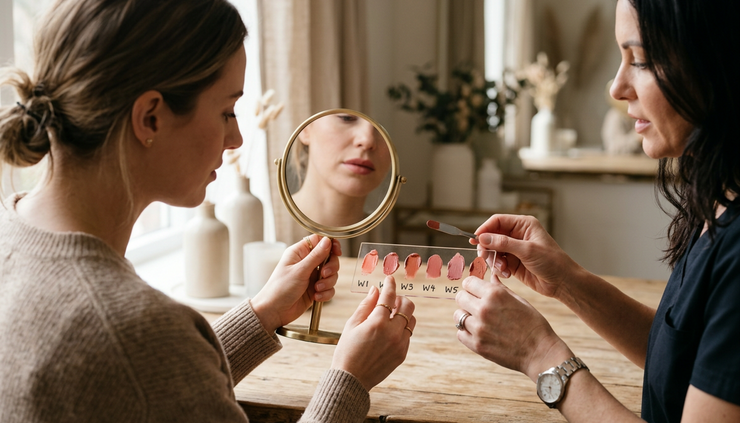
Consultation and undertone assessment
The artist studies the lips in natural or neutral lighting. They look at the depth, coolness, border, inner lip tone, and any uneven areas.
First neutralization session
Warm corrective pigment is implanted to balance the cool tones. This session may heal softer than expected, especially on deeper lips.
Healed review
The artist checks how much warmth remained, how the cool tones responded, and whether the lips are ready for another correction or a target color.
Second correction or color-building session
If cool tones are still visible, another neutralization layer may be needed. If the lips are balanced enough, the artist may begin shifting toward the desired blush shade.
Final refinement
This session perfects saturation, shape, and color balance. Not everyone needs it, but many clients do.
The waiting period between sessions is also important. Lips need time to heal fully before more pigment goes in. Rushing can increase irritation and may affect how the color settles.
A person with lightly cool lips may reach a beautiful result in two appointments. A person with deeper hyperpigmentation may need three or more. Neither situation means the work is failing. It simply means the lips are responding at their own pace.
Why lips may look darker during healing
One of the most stressful parts of dark lip neutralization is the healing stage. The lips may look bold, bright, patchy, pale, or even darker at different points.
This can feel alarming if it is not explained ahead of time.
After cosmetic tattooing, the lips go through a normal healing response. The skin has experienced minor controlled trauma from the tattooing process. For melanin-rich lips, that trauma can sometimes trigger temporary darkening. This is related to post-inflammatory hyperpigmentation, which means the skin produces more pigment as part of its response to irritation.
This does not automatically mean the final result will be dark.
The healing stage may include:
Swelling during the first day or two
A brighter or warmer color at first
Dryness and light flaking
A faded or “disappearing” phase
Temporary grayness or darkness
Gradual color return over several weeks
Many clients judge the result too early. Lip pigment can look very different at one week, three weeks, and eight weeks. The artist needs to see the healed lips after the color has settled before deciding the next step.
This is especially true with dark lip neutralization. The first session is often not meant to look like the final soft blush. It is meant to shift the base in the right direction.
Following aftercare also matters. Picking, scrubbing, using harsh products, or exposing freshly tattooed lips to irritation can affect healing. Your artist should give clear aftercare instructions based on their technique and your skin needs.
This article is for general education only. Cosmetic tattooing involves the skin, so personal medical history, skin conditions, allergies, and healing tendencies should be discussed with a qualified professional before treatment.
What makes someone a good candidate
A good candidate for dark lip neutralization usually has lips that show coolness, darkness, or uneven pigmentation and wants a more even appearance.
This may include lips that are naturally:
Darker around the border
Cool brown or purple-toned
Grayish in certain areas
Uneven between the top and bottom lip
Deeper in color than the desired blush result
Stable lip health matters too. Active cold sores, open cuts, severe dryness, irritation, or recent lip filler may require waiting. Some clients who are prone to cold sores are advised by their healthcare provider to take antiviral medication before lip tattooing. That is a medical decision and should be handled by a licensed medical professional.
Good candidates also understand that the process is gradual. The best results come from respecting color theory, healing time, and the natural limits of the lips.
What to ask before booking
A consultation is not just a formality. It protects the final result.
Before booking, ask questions that reveal how the artist thinks through the process.
Good questions include:
Have you worked on lips with my undertone before?
Can I see healed photos of dark lip neutralization?
Do you expect I will need two sessions, three sessions, or more?
Will my first session be correction only?
What colors do you expect to use and why?
How long should I wait between sessions?
What should I expect during the darker healing phase?
What final shades are realistic for my natural lip color?
A confident artist should be able to explain the plan in plain language. They should not promise a pale pink result in one appointment if the lips need correction first.
Also pay attention to sanitation, licensing, consent forms, aftercare instructions, and whether the treatment environment feels clean and calm. Technique matters, but safety is the baseline.
What results can look like over time
The best dark lip neutralization results often look natural. The lips may appear warmer, softer, and more even. The border may blend better with the center of the lip. The overall tone may look healthier and less cool.
That said, results vary. Cosmetic tattoo pigment fades over time, and lips are active tissue. They move, shed, and respond to lifestyle factors.
Long-term color may be affected by:
Natural undertone
Amount of melanin in the lips
Sun exposure
Skincare and exfoliating products
Smoking or frequent irritation
Healing response
Pigment choice and technique
Number of completed sessions
Maintenance may be needed in the future, but timing varies from person to person. The goal is to build a balanced foundation, then refresh when the color has softened enough to need it.

The best next step before lip blush
If your lips are cool, dark, purple-toned, gray-toned, or uneven, regular lip blush may not be the right first appointment. Neutralization may need to come first.
A photo assessment can help identify the undertone, but an in-person consultation gives the clearest answer. Lighting, natural lip depth, border pigmentation, and healing history all affect the plan.
Send a clear photo of your lips in natural light or book an in-person consultation to assess your lip undertone before choosing a pigment color. The right first step can make the difference between a dull healed result and lips that look balanced, radiant, and true to you.


Comments